October 20th 2026: For mastering engineer Doma Hantó, founder of Phantom’s Mastering, music has never been a casual interest. It has always been part of his identity.
Doma comes from a long line of musicians. His father played guitar for the legendary Hungarian artist Péter Máté, and his aunt performed as a violinist with the Vienna Philharmonic. Doma received his first guitar at the age of four, and from that point onward music became central to his life.
As he grew older, his focus shifted from performance to sonics. He became fascinated by why certain records felt more powerful, more emotional, more immersive than others. Over time, that curiosity led him toward mastering, the final stage of the production process where subtle decisions can shape how music is ultimately experienced.
“The key moment was when I first heard a properly mastered track in a treated room,” he recalls. “It was like seeing in 4K for the first time. I knew then that I wanted to be the person responsible for that final magic.”
Today, Doma works primarily with independent artists, producers and occasionally record labels from around the world. Having completed several hundred masters across genres ranging from electronic music and bands to singer songwriters and experimental projects, he has developed a workflow built on precision, restraint and trust.
Most of his projects are delivered remotely. That makes translation critical. Every master must hold its integrity whether played on high resolution studio monitors, headphones, club systems or consumer streaming platforms. Achieving that consistency begins with monitoring accuracy.
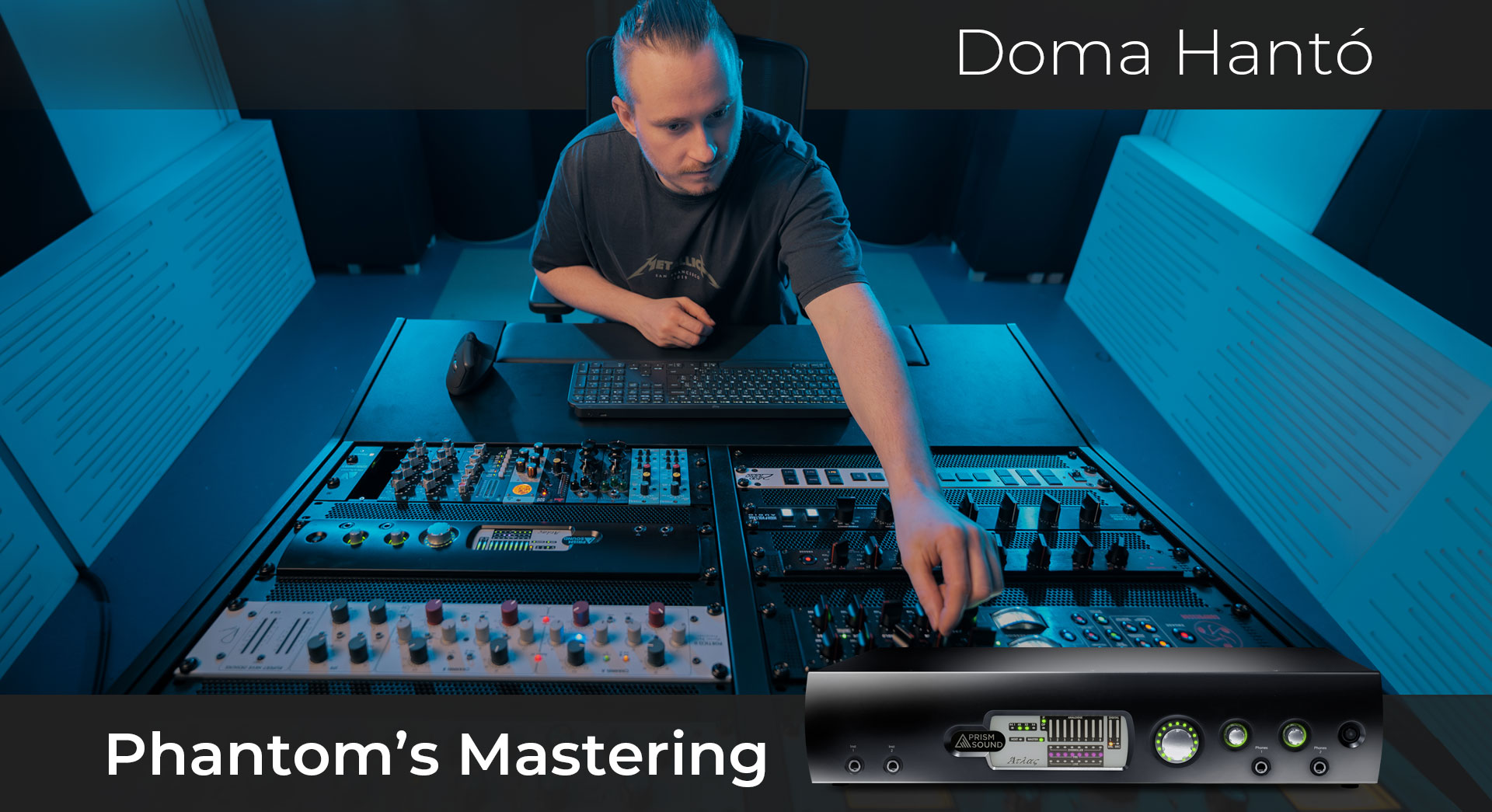
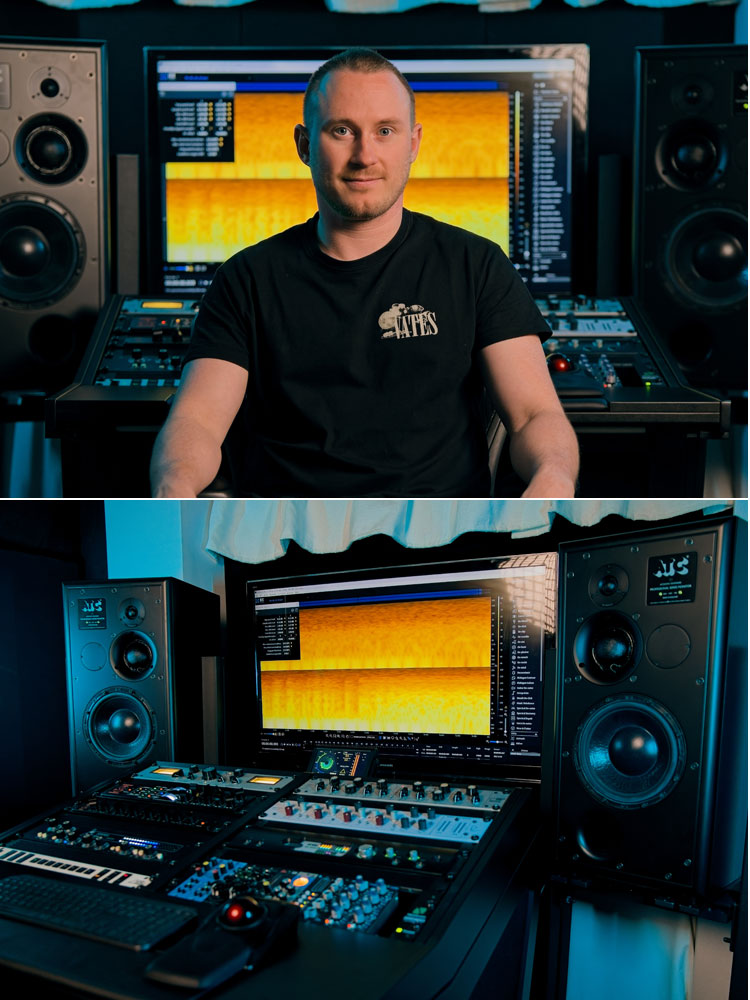
His studio is a dedicated mastering environment designed around controlled acoustics and long form critical listening. Developed with the support of GIK Acoustics, the space has evolved from a more gear heavy setup into a refined hybrid chain where every component serves a clear purpose. The emphasis is not on quantity of equipment, but on reliability, clarity and focus.
At the centre of the system sits Prism Sound Atlas, forming the backbone of his monitoring and conversion workflow. In a mastering context, conversion accuracy is not a specification on paper, it directly influences every creative and technical decision. Atlas provides the transparency required to judge micro dynamic changes, low level detail and stereo depth with confidence.
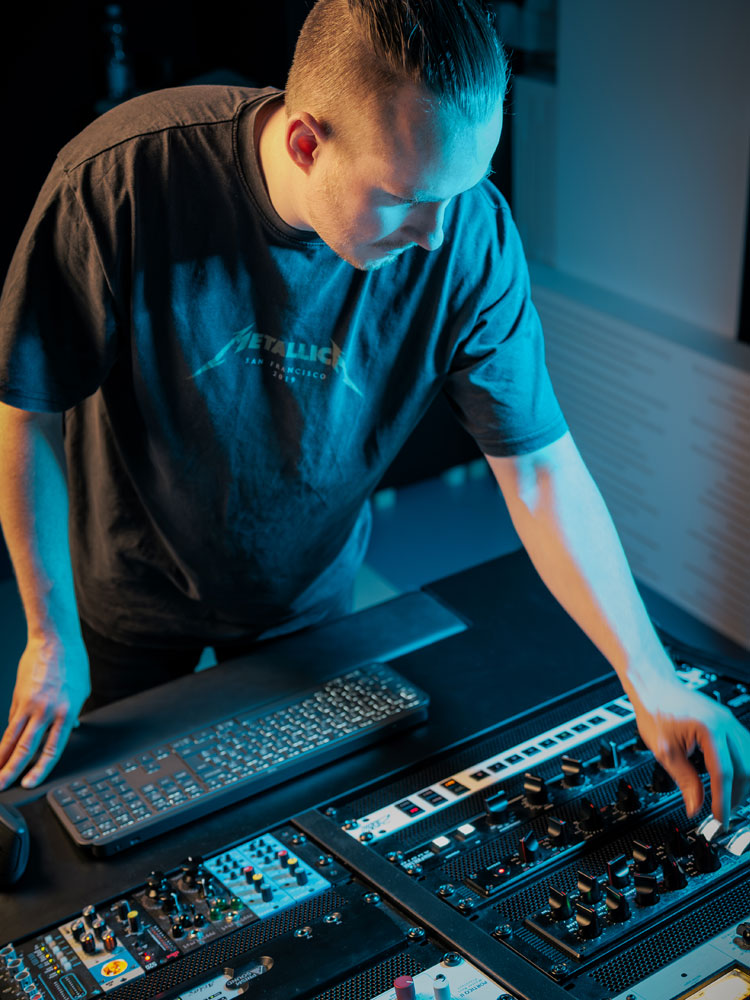
Doma combines high end analogue processors from Dangerous Music, Neve and API with precise digital tools, creating a hybrid environment that balances musical character with exact recall and control. The Prism conversion ensures that what leaves the analogue chain is captured and reproduced without colouration or exaggeration.
Prism Sound first entered his world during his studies with Berklee Online, where his mastering tutor, Marc-Dieter Einstmann, worked with several high end converters.
“The Prism unit immediately caught my attention,” he explains. “Over time I kept seeing it in high end mastering environments. Once I started working with it myself, it quickly became a core part of my setup.”
Today, every master delivered from Phantom’s Mastering passes through Prism conversion.
“One of the biggest improvements was confidence in translation,” he says. “When the monitoring chain is reliable, you spend less time second guessing decisions and more time focusing on the music itself. Now what I hear in the studio translates extremely reliably to real world listening environments.”
He also highlights the practical side of the workflow. Features such as the Overkiller circuit on each input provide protection without compromising transparency, while flexible clocking options ensure stability across hybrid routing configurations. In mastering, where signal integrity is everything, these details matter.
Looking back, Doma recognises how his approach has matured.
“Earlier on I probably focused more on processing and tools. Over time I’ve realised that listening and restraint are much more important. Now I pay much more attention to balance, depth and how a track feels rather than how much processing is applied. I listen for the space between the instruments more than I used to. The best masters are not the ones you hear, but the ones you feel.”
That philosophy becomes most apparent at the final playback. After running a mix through his analogue chain and Prism conversion, depth opens up, stereo imaging stabilises and subtle details emerge. For artists who may have spent months shaping a project, that moment when the record finally feels complete is often emotional.
Being trusted with that final stage is something Doma does not take lightly.
He continues to expand Phantom’s Mastering while working with a growing roster of international artists. As an official Apple Digital Masters Provider, he also recently completed his Avid certifications as a Pro Tools Music Professional and Dolby Atmos Certified Professional, reinforcing his commitment to continuous development and technical excellence.
For Doma, mastering is not about imprinting a signature sound. It is about revealing what is already there, with honesty and precision.