June 29th 2026: For producer, engineer, mixer, drummer and studio owner Josh Block, music has always been about movement, collaboration, and responding to what is happening in the room.
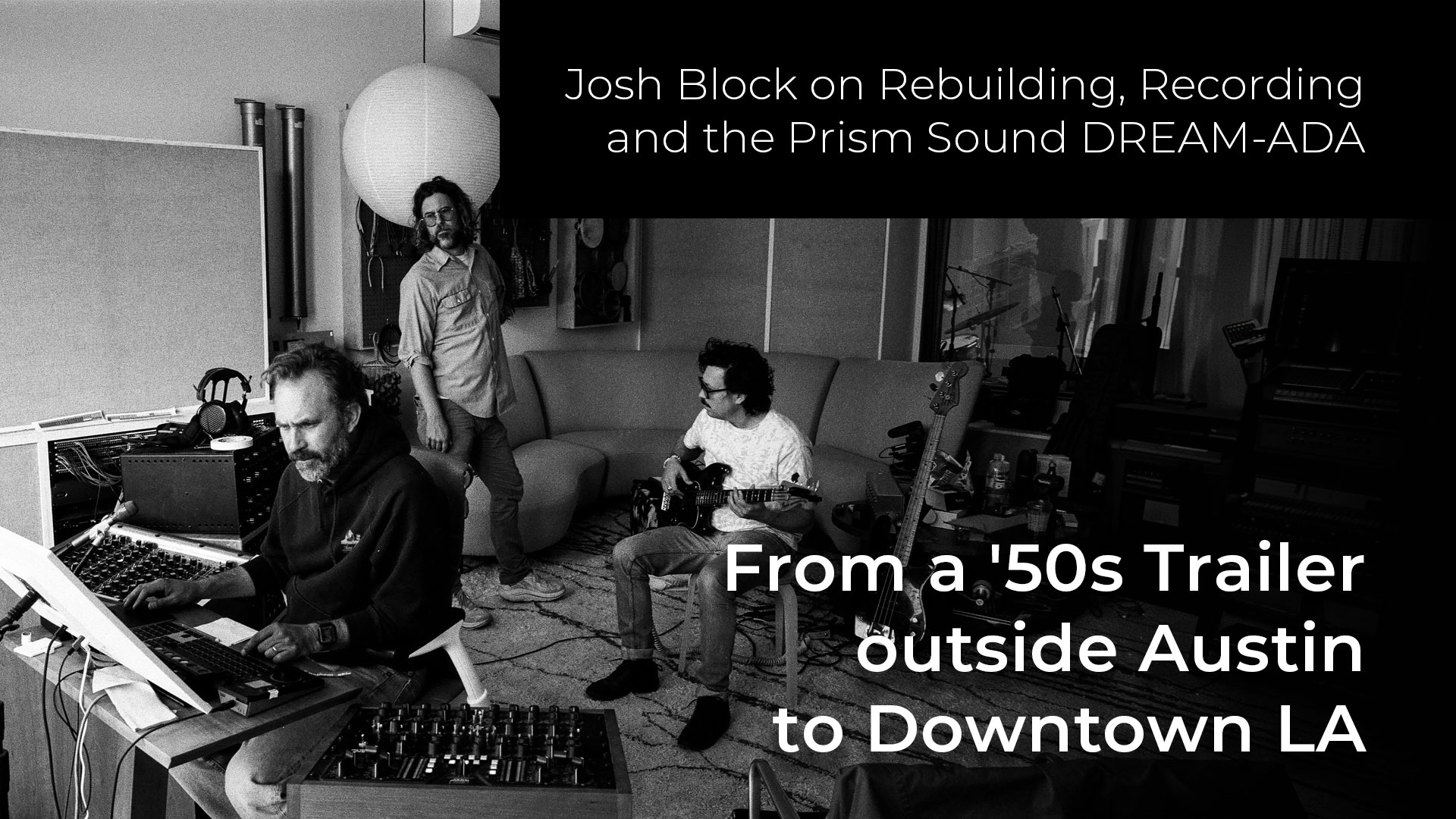
Raised in a musical household, his route into professional audio has been unconventional and entirely hands-on. It has taken him from jazz percussion studies and recording bands on early Steinberg software, to making records in a 1950s trailer, building and running Niles City Sound in Fort Worth, and now working from a new creative space in Downtown LA.
Those early experiments became something more serious when Block began recording music for release with his band White Denim. More recording work followed around Austin, eventually leading to Niles City Sound, a studio associated with artists including Leon Bridges and CAAMP.
Today, Block is not easily boxed into a single job title. Depending on the day, he may be producing, engineering, mixing, mastering, writing, playing drums, running a studio, or working with tape and archive material. The range of work remains broad, but his approach has become more organised over time. Rather than trying to fit neatly into one role, he focuses on knowing which hat he is wearing at any given moment, while staying open to whatever form the collaboration takes.
His workspace has evolved in much the same way. After building a larger commercial studio in Fort Worth, Block moved to Los Angeles and developed a highly mobile recording rig that could be packed down in a day and taken wherever the session needed to happen. The idea was simple: every piece had to be ready to travel, with racks, channels and the mic locker able to move quickly when required. Later, after settling in Altadena and beginning to build a similar setup there, his home and studio were lost in a fire. The next rebuild took him to Downtown LA, where he created a space built around flexibility, comfort, and the ability to hear clearly.
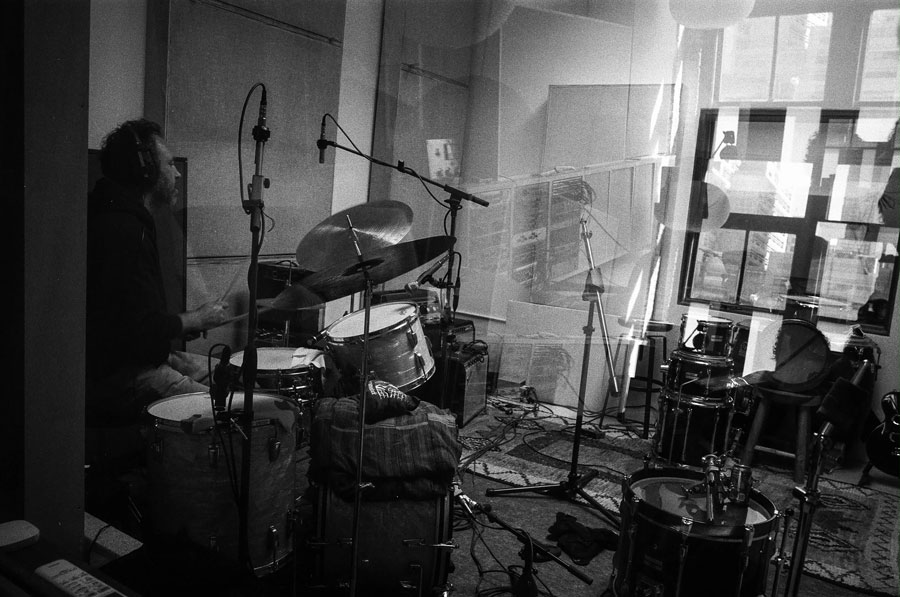
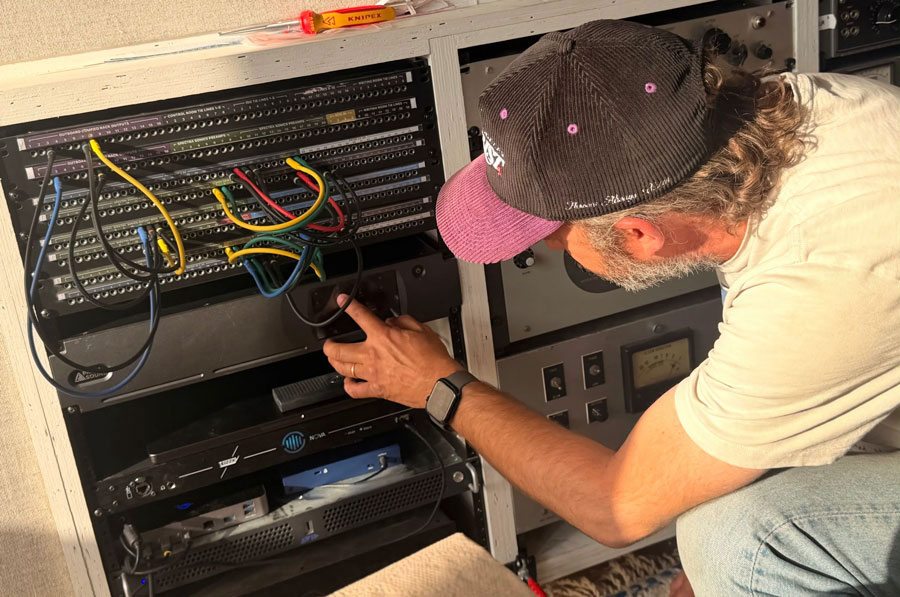
The current studio carries the same practical, hands-on spirit, but with a stronger focus on playback and workflow. It includes a mastering and mix room with a DIY feel, an isolation booth, a linked writing room used by his friend and collaborator Charley Damski, and a tracking room across the hall run by engineer and producer Daniel McNeil. The result is a creative, flexible, and professional environment that still feels rooted in the same resourceful approach that has shaped Block’s work from the beginning.
Musically, Block has always gravitated towards records made by people playing together. While modern writing and production sessions are part of his working life, including one or two-day sessions where a track is built from scratch, the work that seems to reach people most deeply has often been ensemble-based. “People playing instruments,” as he puts it. Alongside his work with Leon Bridges, CAAMP and White Denim, Block is currently working on projects with Divorce, Braden Lam, Charley Damski and LA artist Chrissy Brennan. His own musical instincts remain rooted in performance, tone and feel, with acoustic guitar, piano, guitars, and drums all central to what he loves to record and mix.
Block has also learned not to fear the difficult moments in a production. Some of the records with the most life and longevity, he says, have involved a degree of danger or anxiety: a tape machine that would not bias correctly, a four-day window to make an album from setup to breakdown, or a hard drive failure that left only a rough mix available. Rather than treating these moments purely as problems, he has come to see them as part of the process, and sometimes as the pressure that pushes a record into more memorable territory. Those challenges, he says, have often resulted in a fan favourite or one of an artist’s best-known pieces of music.
When Block first began wondering whether his A/D and D/A conversion was getting in the way of the work, he discovered Prism Sound. Hearing an ADA-8XR for the first time made an immediate impression, and from there he continued building his studio around better conversion wherever possible. That path eventually led to Prism Sound’s flagship DREAM-ADA, which Block describes as “the final boss”.
In Block’s current setup, DREAM-ADA sits at the centre of the room and removes one of the main frustrations he had encountered in increasingly varied modern workflows: having to think about whether the conversion path was right for tracking, mixing, playback, headphone feeds, hardware inserts or mastering. “The thing I needed was to not think about what part of the process I’m in and how it relates to my A to D or D to A,” he says. “A/D is everything for me,” he explains. “I’m tracking through it, of course, but the D/A side is just as important.” Block still spreads his mixes across 24 channels of custom-built Spectra Sonics channels, built by his friend Jim Vollentine, so the quality of conversion back out of the DAW is a major part of his workflow. He also likes to keep a mix bus active throughout a production, making trusted hardware insert monitoring essential. Being able to maintain zero-latency monitoring during a session while keeping a hardware insert across the master bus is central to the way he likes to work.
The same trust is needed across headphone monitoring, from his mastering rig through to artist cue mixes. As more mastering work comes in, often at different sample rates, DREAM-ADA’s ability to handle multiple clocking requirements within a single system has become particularly valuable. For Block, being able to “pitch and catch” with different clock settings running on one box is, in his words, “a literal dream come true.”
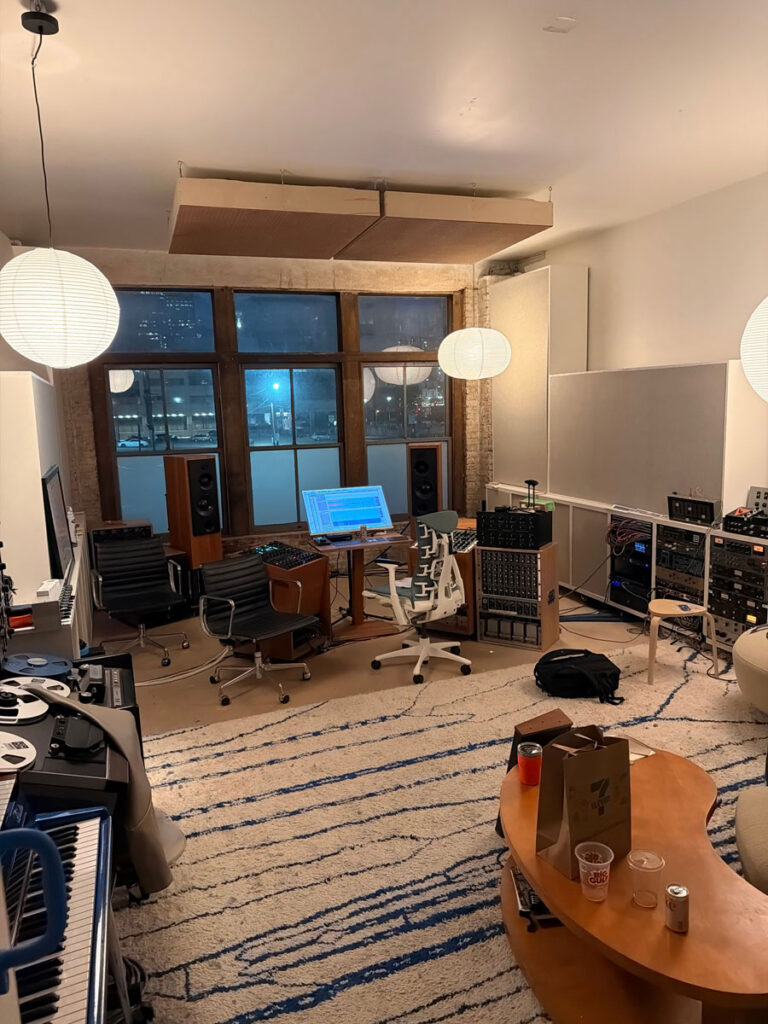
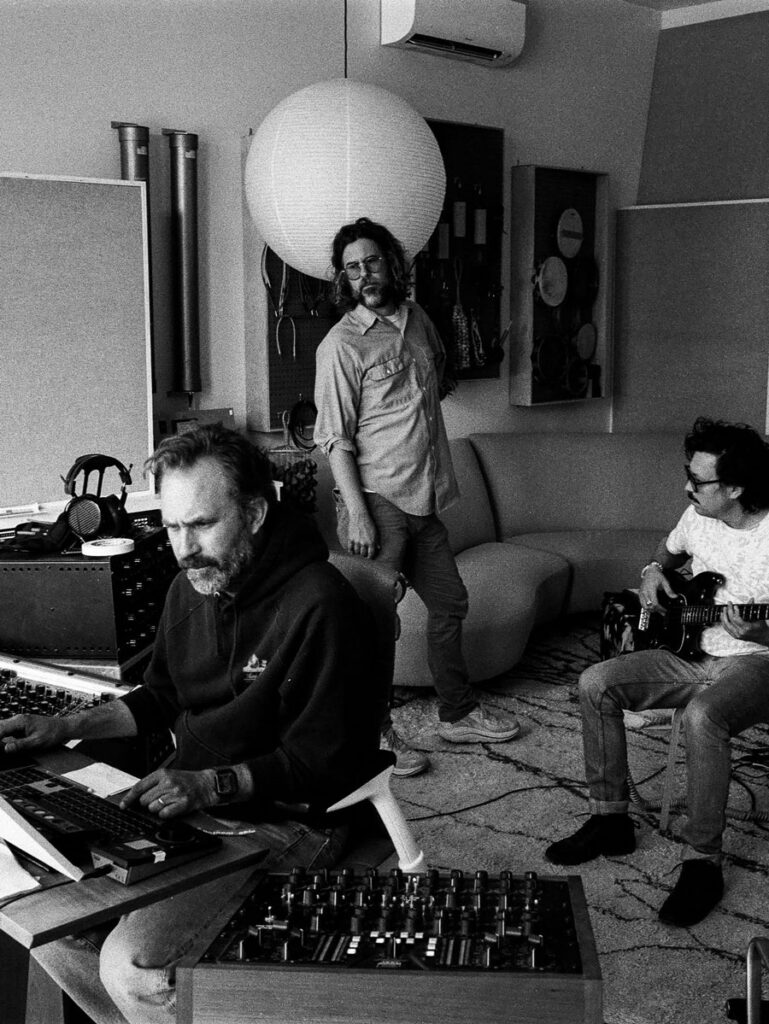
That flexibility speaks directly to the changing role of the recording engineer. As more parts of the production process become consolidated, the need to adapt is constant. Block still values outside collaborators, including dedicated mastering engineers, mixers, and musicians, but he also recognises when a project requires him to learn a new skill or solve a new problem. “This box has taken ‘well shucks, guess I need another box to do what I’m being asked’ out of the equation,” he says. “Pitching and catching with a single unit is rad. It needed to happen.”
Looking back, Block says his approach to sound has become more reactive, more open, and less concerned with being placed neatly into one professional category. The work itself comes first, and staying flexible keeps him alert to what is happening in the room. From an audio standpoint, that means being ready to receive the sounds as the artist creates them, then react in a way that supports where the music is going. Sometimes a small move, made at the right moment, can create a much bigger effect.
The year ahead is busy. Block is working on projects with Divorce, Braden Lam, Chrissy Brennan, and White Denim, while continuing to build the creative community around his Downtown LA space with Daniel McNeil, Ryan Hawkins, Charley Damski, and others. Following the fire, that sense of community has become part of the rebuild: keeping loved ones close, staying open to new collaborations and creating a space where amazing work can happen.
With DREAM-ADA at the heart of that workflow, Block has a system that lets him move between tracking, mixing, mastering and playback without questioning the conversion. For someone whose work depends on staying open to the moment, that confidence matters.
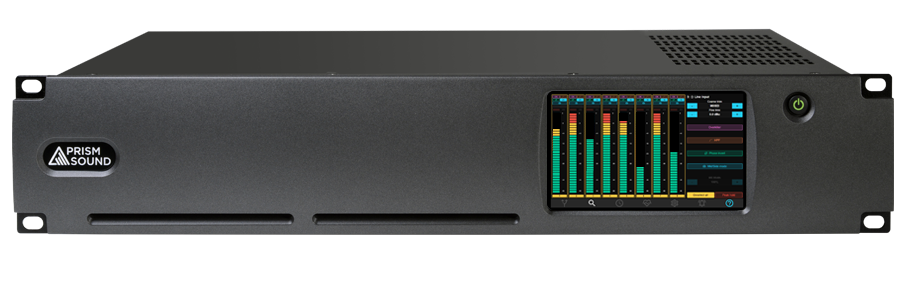
For more information about the Prism Sound Dream-ADA, click here.
To request a demo of the Prism Sound Dream-ADA or another interface, click here.
More information on Josh Block can be found on Instagram here: www.instagram.com/jockblosh